Earrings are easy to misjudge online. A pair of hoops that looks balanced on a model can overwhelm a smaller face, delicate studs can disappear at a distance, and long drops can fight with your jawline or your hair. Scale and proportion against your own face decide whether a pair works, and a flat product photo on a white background tells you none of it.
That is the gap an AI earrings try-on fills. You upload one selfie, pick a style, and the AI places the earrings on both ears while keeping your face, skin, and lighting the same. Instead of guessing from a thumbnail, you see studs, hoops, or drops on you before you commit. This guide covers how to use it and how to read the result honestly.

A virtual try-on does one job: it helps you judge style, scale, and how an earring shape reads against your face before you buy. It works well for:
- Narrowing a long wishlist down to two or three pairs worth ordering.
- Checking whether a hoop size that looks good on a model also suits your face.
- Comparing a delicate stud against a bold drop side by side.
- Mocking up a look for a profile photo or a social post.
It is not a real fitting tool. It will not confirm the exact dimensions, the metal, the weight, or whether a post is hypoallergenic. Treat the result as a strong shortlist, then check the actual measurements, material, and return policy with the seller before you pay. It is also not a tool for editing someone else's photo without their consent.
The AI can only place earrings well on a face it can read clearly. Open the AI earrings try-on and upload a photo that gives the model what it needs:
- Both ears, or at least the earlobes, are visible. This is what the earrings align to.
- You are facing the camera head-on. Side profiles let one ear hide, so the pair lands unevenly.
- Your hair is tucked back from the ears, or at least not covering the lobes.
- The light is even. Soft daylight from a window beats harsh side light that hides one ear in shadow.
A recent phone selfie taken near a window is plenty. You don't need a studio portrait, just a clear, head-on shot with your earlobes visible.
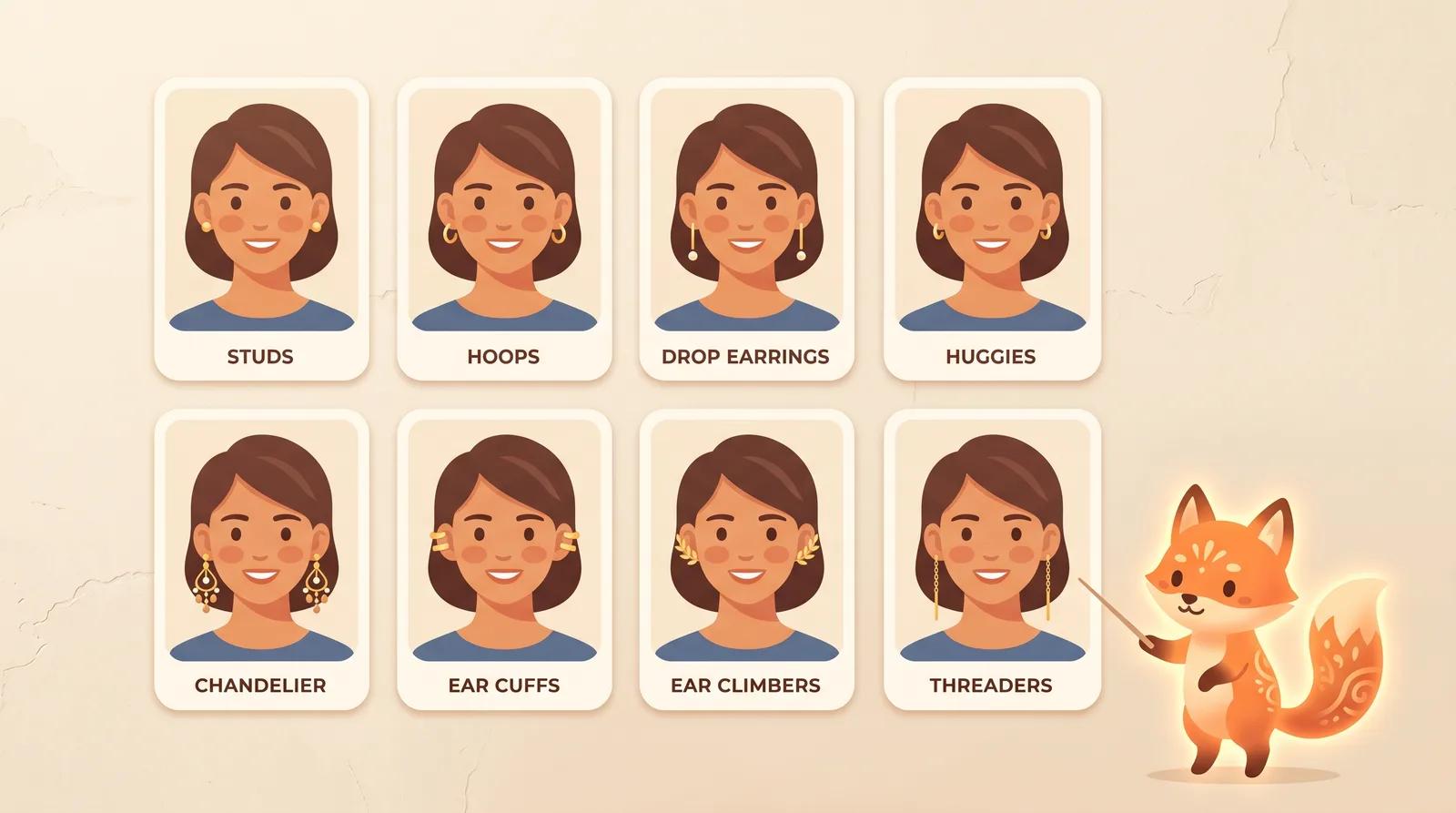
Choose a style reference. There is no prompt to write; the styles are pre-built, so you pick the shape instead of describing it. You get eight to compare:
- Studs: small, sit flat on the lobe.
- Hoops: circular, from small huggies to large.
- Drop earrings: hang below the lobe.
- Huggies: tiny hoops that hug the lobe.
- Chandelier: tiered, ornate, lots of movement.
- Ear cuffs: wrap the outer ear, no piercing needed.
- Ear climbers: trace up along the lobe.
- Threaders: a thin chain that threads through.
Comparing styles is free, so run more than one. Try the two or three shapes you are torn between on the same selfie and look at them next to each other.
Pick a style and run the try-on. The model adds the earrings while keeping your identity, skin texture, lighting, and expression stable. It takes a few seconds.
When it finishes, zoom in and check the details that tell you whether a pair works on you:
- Lobe placement: each earring should sit on the lobe naturally, not float beside it or sink in.
- Symmetry: both ears should match in position and size.
- Scale: the earring should suit your face, not overwhelm a smaller frame or vanish on a larger one.
- Drop length: for drops and chandeliers, the hang should clear your jaw and hair believably.
- Shadow and contact: the piece should cast a soft shadow and look like it rests on the ear, not pasted on.
If something looks wrong, regenerate or try a different style instead of keeping the first pass. Each run varies a little, and a cleaner, more head-on selfie with both ears visible fixes most placement problems.
Earring shape is mostly about balancing your face shape. Use this as a starting point, then let the try-on confirm it on you.
| Earring style | Tends to suit | Vibe it gives |
|---|
| Studs | All faces | Everyday, minimal |
| Hoops | Oval, heart, square | Classic, confident |
| Drop earrings | Round, square | Elongating, elegant |
| Huggies | All faces | Subtle, modern |
| Chandelier | Oval, longer faces | Glamorous, dramatic |
| Ear cuffs | All faces | Edgy, layered |
| Ear climbers | All faces | Sleek, contemporary |
| Threaders | Oval, heart | Delicate, fluid |
The general rule: round faces tend to lengthen with drops, while longer faces balance with studs and hoops. It is a guideline, not a law. The point of trying styles on virtually is that you can ignore the chart the moment one clearly looks right.
The difference between a try-on you can trust and one you can't comes down to the source selfie. A few things matter most:
- Use a sharp, in-focus shot. Clear edges let the model align the earrings. Blurry photos produce sloppy placement.
- Shoot in even light. Face a window in daytime so both ears are lit evenly.
- Keep your head straight and level, and tuck your hair back so both lobes show.
- Check symmetry first. If both earrings match in position and size, the placement is right. If one drifts, regenerate or switch styles.
If every result looks off, the fix is almost always a better source photo, not more attempts.
You can upload a selfie, pick a style, and generate a try-on on the free model without an account. Comparing the eight styles costs nothing. Signing in removes the export watermark from your download, so the saved image is clean and ready to share or drop next to a product page.
You don't have to gamble on earrings from a flat product photo. Upload one clear, well-lit selfie, compare a few styles on your own face, and check the placement before you order.
Try the free earrings try-on →